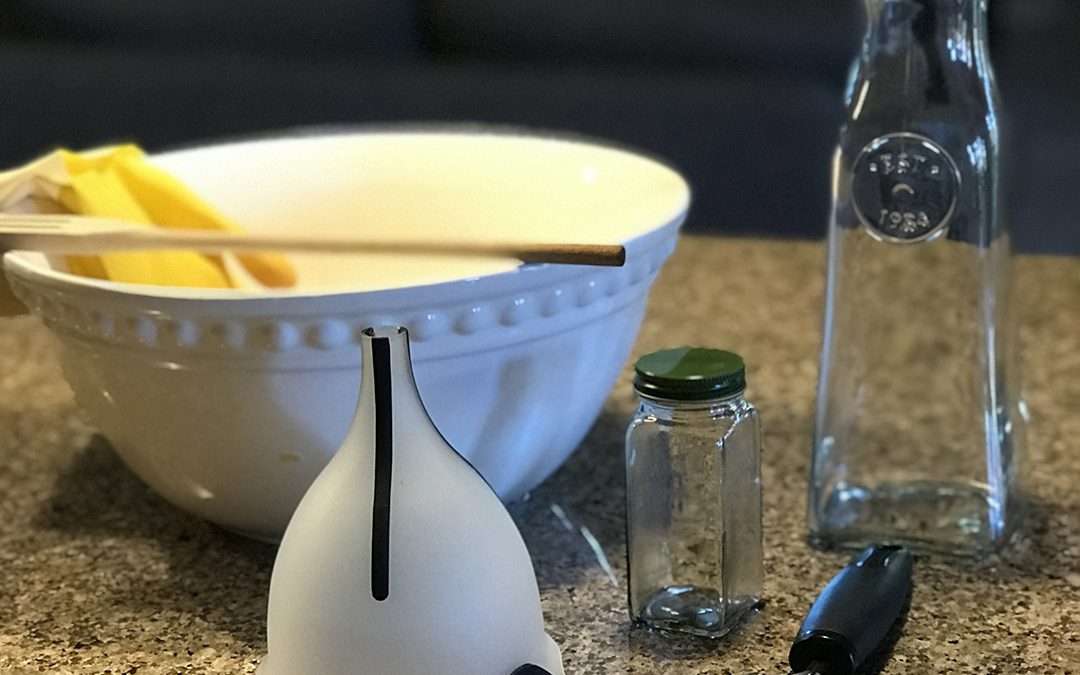
Shown above are some of the items I have on hand for making ink: A large mixing bowl, rubber gloves, a potato masher, a glass flask, small glass spice jars with tight lids, and paper towels. I would include coffee filters for filtering out organic matter from your ink and a trusty apron. You’ll want gum arabic as a binding agent and a wintergreen essential oil to use as a preservative.
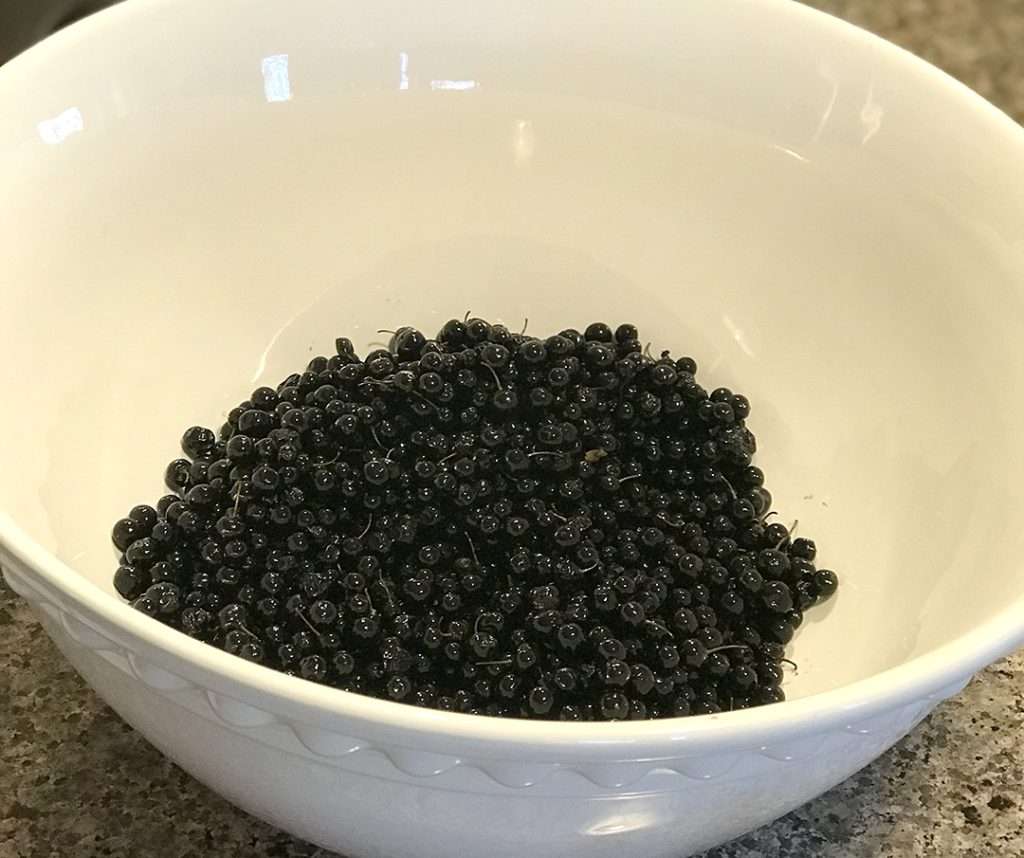
Shown above are recently harvested buckthorn berries from my backyard. It was an unusually warm October day. The redwing blackbirds and grackles declared their displeasure with my berry-picking presence during the hold time. It took about two hours to gather
about 2 cups of berries — I’m eyeballing the amount.
How I Went About Making Natural Ink.
A little video short I put together to show how even a novice can make ink. The whole process from harvesting to making the ink took about two days. I harvested one day, made the ink on the second day, and let the ink filter from the second batch of mashed berries overnight.
Before I ventured into making ink, I decided to collect everyday objects needed and dedicate them to making ink exclusively. (This is where a thrift store comes in handy. This also removes any barrier for when I want to make ink. Sadly, I was too late to harvest black walnuts this year. Black walnut ink is the ink of scribes and Shakespeare.
I would love to have the buckthorn removed so I could see the beautiful marsh that lies just beyond the wall of barbed nuisance. And yet, the buckthorn gave me a gift. Life, as in nature, is a paradox.
The ink turned out better than expected — a rich, earthy plum that takes its time resting and drying on paper. When the ink finally dries, it has a luminance that I am not used to seeing with other mediums.
There’s plenty of room for experimentation. I mentioned I added about 10 drops of wintergreen essential oil to preserve the ink, but you can add vinegar or salt. Each additive will have a different effect on the ink and how it performs when it hits paper. For now, I love the waft of wintergreen when I open a bottle of home-made ink.
If you are at all interested in making ink yourself, I highly recommend the book MAKE INK: A Forager’s Guide to Natural Inkmaking by Jason Logan. I know I have mentioned his book several times, but it really is a beautiful entryway into making ink that feels accessible and adventurous. Jason also has several videos showing the process more elegantly than I can. I’m just beginning.
Your turn.
Have you ever made ink from natural sources before? How did it turn out? Have a natural substance that’s unusually good for making colorful ink? Please share your ink-making adventures. I respond to all.
Till next time, be kind to everything that lives and especially be kind to yourself.
Was this an inspiring post for you? These might inspire you, too.
Making Paper Houses. Instead of getting pissed and pitching perfectly good watercolor paper, I do this instead.
Got art? Make Greeting Cards. For years, I made greeting cards using my artwork. Here I show you how and the tools I use to do it. Card templates included.