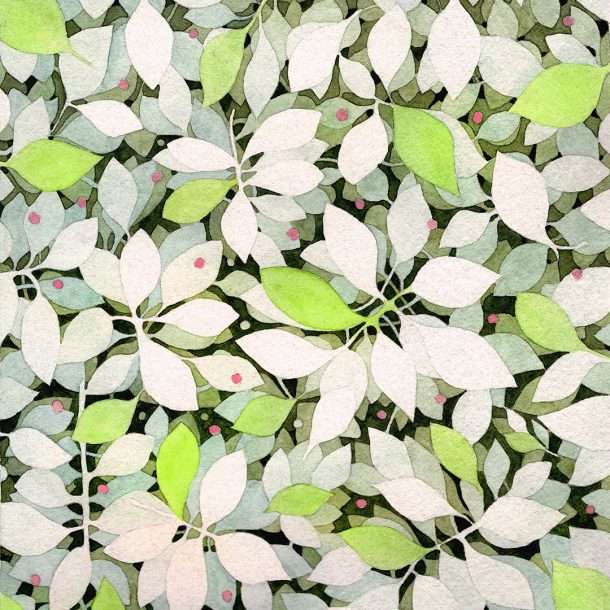
Those of you who have been following me for a while know that I look for beauty in nature in the oddest places. Like in a water-filled mud trench carved out by pickup truck tires. There, growing out of the muck is a stand of slender-leaved plants with tiny pink flower clusters. I have no idea who they are. I take a picture. I noted where I found them — in the shady deciduous woods of Ritter Farm Park, a nature preserve and educational center near where we live.
It’s truly a delight to finally learn the name of a plant I have long wanted to know about. Yes, it’s easy to download a plant ID app to your phone and collect data that way. I prefer to gather my data serendipitously.
As I move towards the end of The Light Eaters by Zoe Schlanger, in her chapter Inheritance, I discover the name of my unknown plant I photographed and did a drawing study, to illustrate this post.

Orient Lady’s Thumb Smartweed (Persicaria maculosa or it could be Persicaria longiseta. Plants often go by many names).
Non-native, this smartweed showed up in the Great Lakes region around 1843.
In this chapter, Schlanger is meeting with Sonia Sultan, a plant evolutionary ecologist at Wesleyan University in Connecticut. Sultan describes her early affinity with plants. Her first word was “flower.” I love that she likes being around plants because they have “this serene competence.” (Page 219) I feel the same way when I hang out in my garden. There is this sense that they know exactly what to do and how to do it.
Further into their conversation, Sultan mentions a Polygonum cespitosum, a plant name I don’t know. (Page 232) I look it up on my iPhone, and bingo, there is my mystery plant. Polygonum cepitosum (also known as Persicaria cespitosa) is a member of the Buckwheat family.
What I found beautiful (others report this plant beautiful, too) is a smartweed. Smart as in intelligent, I would like to think. The “smart” part denotes the acid smartweeds produce in their stems. Get a shot of that in your eye, it will smart. On your skin, it will certainly irritate it.
Now I had to determine which species of smartweed I found growing in the muddy, water-logged rivets left by pickup truck tires.
After researching a handful of smartweeds, also known as knotweed, I concluded my lovely plant is an Oriental Lady’s Thumb. Native to Asia, China, Japan, and Southeast Asia, it was first spotted in the Great Lakes region in North America around 1843.
By 2000, non-native smartweed was declared invasive. People saw it everywhere. But why now? Why the over one-hundred-and-fifty years lag in time?
The thing about non-native plant species, either invasive or not, is that a vast majority of them peter out. They can’t adapt fast enough to survive in their new environment. Humans and our global movements are the source of non-native plant species making it to our shores. Seeds buried in the treads of muddy boots or innocently carried on clothing, plants move with us as we move through their homelands.
What makes a non-native plant successful? As Sultan explains during that lag time, smartweeds were rapidly evolving due to some extraordinary individuals who were flexible or had the plasticity to learn on the fly about their new environment and pass that critical information on to their offspring. It takes time to learn a new place, biologically speaking, and once the smartweeds gained skills for dealing with their new home, they could exploit it for their benefit. (Page 233)
Smartweeds prefer moist environments but do fine in dry settings, too. They adjust their leaves, their flowering times, and root systems to accommodate various conditions, thriving along as they go.
I have to admire the smartweed and all the non-native and, yes, invasive plants who unwittingly immigrated here. It speaks to a form of intelligence in plants, certainly their tenacity.
One main throughline I found reading The Light Eaters is that we are in a “Botanical Renaissance.” Studying the flexibility and adaptability of non-native and so-called invasive plants could help us understand how to incorporate these same behaviors in native plants. (My thought, not the author’s).
I’m not talking about genetic alterations. I don’t believe in “Frankensteining” nature. I know we are and will continue to lose plant species due to climate change. Still, watching for certain individuals or subsets of species of native plants who display plasticity could lead to a more robust, resilient species that can withstand and even thrive in our rapidly changing environment.
That’s my theory with a happy outcome. It’s also my sincerest hope.
References: Chapter 10: Inheritance, pages 217-239, The Light Eaters, Zoe Schlanger @ 2024, published by HarperCollins.
Your Turn.
What are your feelings about so-called “weeds?” What are your feelings about plants in general? Are you curious about the names and relations of plants? If so, consider us kindred spirits. Jot your comments down in the box below. I respond to all. Thank you for reading, and remember, be kind to everything that lives.