Studio Time, Business, and Staying Sane
For 25 years, I ran a freelance art director / graphic design business. There were clients to keep happy and projects with deadlines. Every weekday, I knew what to prioritize, what needed to be done for clients, but also what needed to be done for the business. In reality, I worked reactively instead of proactively. It eventually caused me to burn out. What I’ve learned since is that a full-time artist schedule has to be built deliberately — or the business consumes the work.
As I transitioned to a full-time artist wanting to build a sustainable art business, I realized I was now simultaneously a maker and a marketer. The same hands that paint and draw also write the content for the website, blog, and social posts, manage the shop, send out the newsletters, and do the SEO.
How did I protect the work (the making of the artwork, my studio time) when everything is screaming for my attention? Here I was, with far more drive, doing the work I always wanted to do. At the same time, I didn’t want to let the business side of art burn me out, as my freelance business did.
We’ve all heard that the right mindset is key to our success. Not the hours put in, not the number of posts written, and certainly not the number of followers you have.
I knew I wanted a mindset that valued life-work balance, the courage to put my work out there, and a practical strategical business approach. I wanted to be and feel like the CEO of my business and my life. That’s the overarching picture. What about the day-to-day?
Slow and Steady Does It.
I am a staff of one. In the future, I may be able to afford to hire help. But for right now, how I arrange my work days is so important, but it took me a while to figure this out.
For one quarter, I kept a daily log of what I did in the studio. At the end of the quarter, I felt like I wasn’t getting anywhere. I couldn’t be both consistent with my art practice and building the business. Needless to say, my email list was stagnant and my art sales flat. But what this daily log gave me was data. I could see how I was using my time and where I could improve my time in the studio.
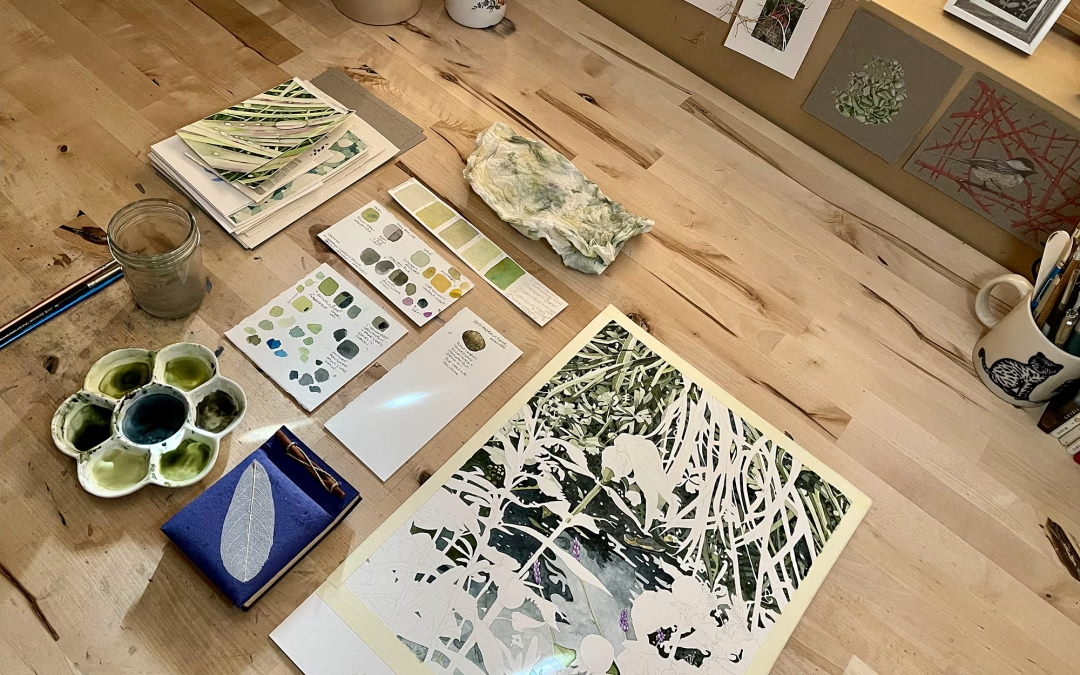
Because I know my work takes a long time to produce (a single watercolor can take a month to complete), I knew I needed 70% of my time devoted to creating the art. The remaining 30% would be devoted to marketing tasks, research, and outreach. I begin my days with meditation, stretching, and a walk. That means I’m not in the studio until 10:00 am. By 4:30, I need to call it a day and take care of life things.
What Does a Full-Time Artist’s Weekly Schedule Look Like?
Here’s the daily rhythm.
Monday — Studio + Admin Reset (10:00–4:30)
10:00–12:00: Studio work
12:00–12:30: Lunch/break (I check and answer emails during this time and only during this time)
12:30–2:00: Weekly planning — review last week, set this week’s ONE marketing priority, check shop analytics
2:00–4:30: Studio work
Tuesday — Studio Day (10:00–4:30)
Full studio day. No social media posting obligation. Just create. (Or write)
Optional: shoot 1–2 minutes of process video while I’m working (this becomes content later, with no extra effort)
Wednesday — Studio + Content Batch Day (10:00–4:30)
10:00–1:00: Studio work (sneaking in lunch at 12:30)
1:00–2:30: Write and schedule the week’s posts (2–3 posts, not daily). One carousel, one reel or process clip, one informational/story post, 1-2 pins of artwork, and for blog posts
2:30–4:30: Studio work
Thursday — Studio Day (10:00–4:30)
A full studio day. My creative tank needs uninterrupted days.
Friday — Studio + Writing + Email + Outreach (10:00–4:30)
10:00–11:30: Studio work
11:30–12:30: Writing time: a blog post and/or social posts for next week
12:30–1:00: Lunch and responding/reading emails
1:00–2:00: Email list work — either write the newsletter OR work on a lead magnet
2:00–3:00: One real-life or online outreach action (pitch a story, email a gallery, reach out to a potential collaborator)
3:00–4:30: Studio work
Weekends — in the Studio 2–3 hours max, guilt-free. I’ll attend an opening, sketch, repurpose a Pinterest pin, and rest. I try not to work through weekends systematically, but when I am preparing for an art exhibit, having some time in the studio helps.
Please note that not every week is tidy.
When it’s written down in your calendar doesn’t mean the day will always go as you would wish. There will always be interruptions and a change of plans. Some days, I am better suited to writing than working on the current art piece in my studio. That’s OK. I know I am making the best use of my time, where my energy is guiding me.
The results? I will know more when I have more data. What I know for certain is that progress is being made with a 70/30 schedule rule, and I’m not feeling deflated or exhausted at the end of the day. During each week, I set aside about an hour to attend to three business goals for the year. It’s a slow, steady pace. It’s intentional, proactive, not reactive. The best part is, I feel I can keep the beauty and calm in the studio, and that gets reflected in my work.
Resource reading for artists:
The Artist’s Way by Julia Cameron: I personally love the artist’s date recommendation she outlines in her book.
Seth Godin’s The Practice. I have only heard of this book, and it is on my must-read list!
If this story resonated with you, you might also enjoy these:
Moving Back To Squares: On why a return to the square format turned out to be a decision about focus, not just composition.
Reflections: We All Start At Zero: A look back at the winding, unhurried path from first brushstroke to exhibiting artist.