

What’s the Difference Between “High Art” and “Low Art?”
Low art is a term I was unfamiliar with until I read a post written by artist Breanna Rhodes via Heijeu Arts Central. She recounts in her article how her art professor told her she made low art. It just about crushed her. Had I been told the same thing as a junior in college studying studio art, that label would have crushed me, too.
Having a B.A. in Art History, it’s embarrassing not to know high art vs low art. I am familiar with and fluent in most art movements from pre-Columbian to Pop.
As a visual artist, I can only claim a broad category of art called contemporary. (Someone did give me the title of post-modern ecological artist, and I thought, ” Wow, would anyone understand that?”) I often wonder what art movements and terms are at work today.
Professor G. James Daichendt defines low art as a concept that typically refers to pop culture and entertainment. Low art is used derogatorily because of its mass appeal.
High Art vs Low Art: Where Did These Terms Come From?
High art and low art aren’t the best descriptors. Generally speaking, high art refers to painting, sculpture, and music, and the study of these disciplines. Art that is classified as high art is made to carry a deeper meaning than what appears on the surface. This explains all the esoteric analyzing of artworks written by art critics I read in college, and I found it difficult to understand what “the hey” they were talking about.
Low art, by contrast, was to differentiate between classical methods of making art and textile art. Low art class came about during the Arts and Crafts movement. We all probably know the movement’s champion as William Morris. Yet, many of us love William Morris designs and have them in our homes.
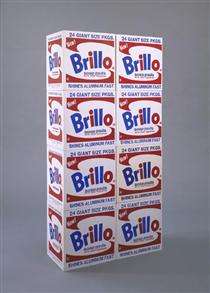
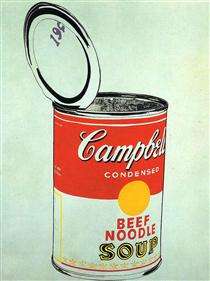
Andy Warhol’s Brillo Boxes (1964) and Campbell’s Soup Can (1962)
Today, High Art vs Low Art — The Lines Are Blurred.
Although the masses can easily digest low art, its quality and craftsmanship are often superb. I think of stunningly designed quilts and the beautiful little ceramic bowls I collect from artists. Many considered low art pieces, such as Andy Warhol’s Brillo Boxes, are showcased in museums. Jeff Koons’ everyday larger-than-life balloon sculptures, each worth upwards of 58 million dollars, are, by definition, “low art.”

Jeff Koons ’ colossal Blue Balloon Dog, 1994-2000
Young emerging artists grew up with the Internet, a conduit for the masses. It’s no wonder these artists reflect our times of connection via technology in startling ways, as Warhol reflected his times with his Campbell’s Soup Cans paintings in the 1960s. We now have an array of digital and meme art taking up space in galleries alongside paintings.

Artist Erin M. Riley at the P.P.O.W. Gallery in New York City, her work illustrates our intimate, everyday relationships with technology.
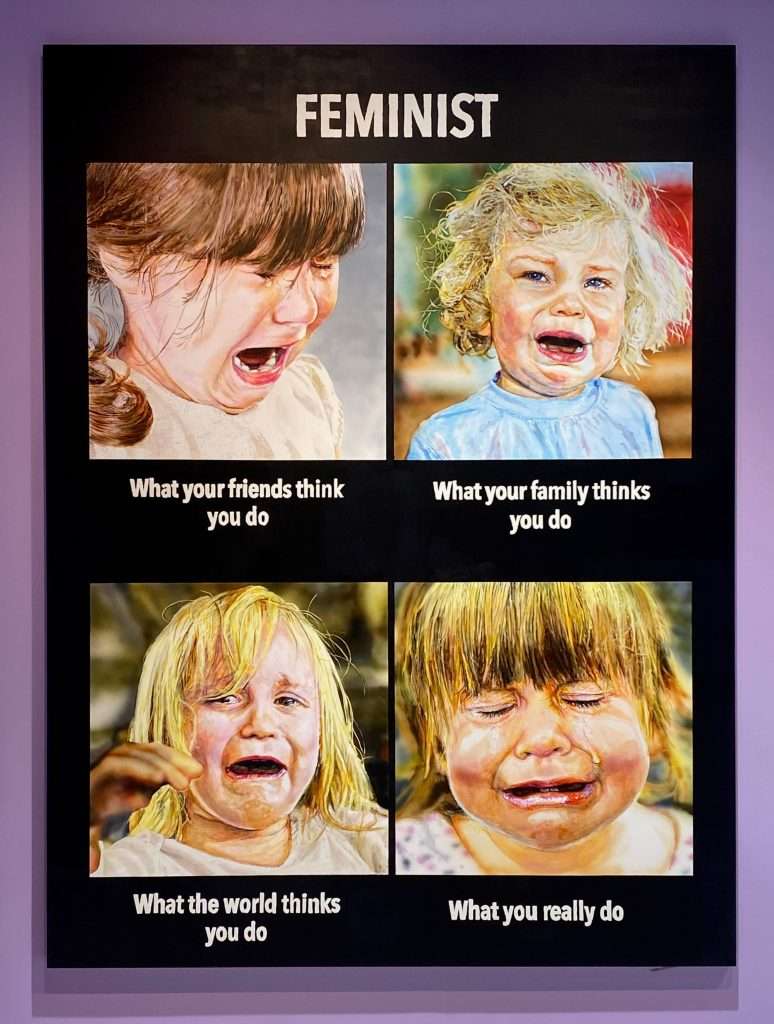
Artist Christine Wang’s Feminist Memes.
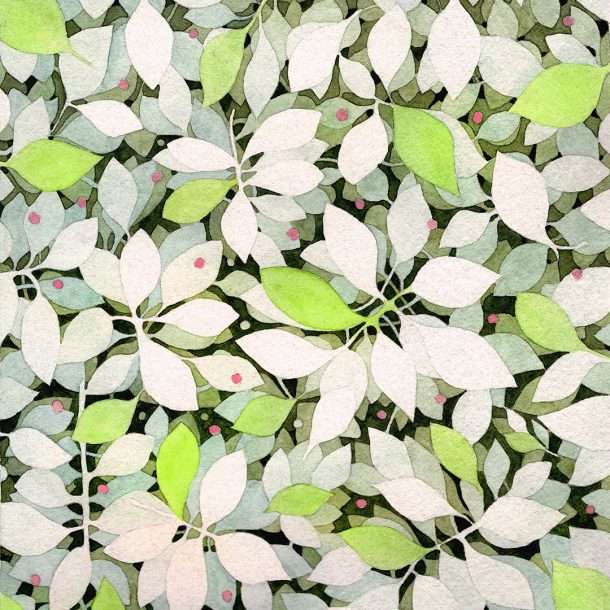
While painting is considered high art, I think of oils in particular, followed by acrylic painting; basically anything on canvas fits that description. Watercolors and works on paper have often been seen as artists’ sketches and studies before creating the real deal on canvas. Working with watercolors was a casual plein-air pastime for the elite and eventually accessible to everyone. Looking at watercolors as art for the masses, I make low art.
Another art form that I have been studying for the past 2+ years is surface pattern design. By definition, this is low art, as its end goal is to decorate everyday objects, from textiles to wallpaper and gift wrap.
The better terms might be classical art and vernacular art instead of high and low art. Then again, high and low are easier to digest and will remain blurry at best.
Final Thoughts on High Art vs Low Art.
Having majored in Art History, I carry the old baggage regarding art labels and movements. Art terms tend to be subjective and can be harmful to artists. Terms create a barrier for regular people who don’t know anything about the art world but know they love the art when the art speaks to them. Art shouldn’t be exclusive (or intimidating). The post title, while meant to be tongue-in-cheek, really should mean art is art, free of being pigeonholed into a category, and that’s taking the high road.
If this post made you think, you might enjoy diving into these:
Reflections. We All Start At Zero. How I began my career as a full-time artist and the journey so far.
Artistic Freedom. Reflecting on the freedoms I have as an artist working today compared to artists of the past.
Or maybe you would like to take in some art. View the Artist Catalog. Or, if the idea of accessible art resonates, take a look at the fine art print shop — watercolors and drawings for nature-inspired homes.
Though I did not go to art school and so am sharing an uneducated opinion, I think that art is art. Judgmental terms like low and high art seems snobbish to me with an underlying goal of suggesting that some types of art are just beyond understanding by regular people. In my opinion, good art is defined as something that speaks to and connect with the viewer. I think art is for everyone!
Thank you for your honest and heart-felt response and perspectives, Sarah. Having majored in Art History, I have some of the old baggage of labels and movements when it comes to art. I’m finding art terms are subjective, if not harmful to the artist. I’ve been in discussions with fellow artists over the term “craft art.” It got heated. If anything terms create a barrier for regular people who don’t know anything about the art world but know they love it when art speaks to them. Art shouldn’t be exclusive or intimidating. The title of the post while meant to be tongue in cheek, really should mean, as you say, art is art, free of being pigeon-holed into a category, and that’s taking the high road.