

The above photo credit by Vincent Tantardini on Unsplash
Responding to Open Calls (Calls for Art) is a part of an artist’s career path, especially when getting started. It’s a chance to gain experience understanding galleries, and the process of open calls and gain visibility as an artist and for your work. Typically, Open Calls are juried by a curator or panel of judges.
After being accepted into three Open Calls this year, I’m seriously considering whether or not to apply to open calls in the future.
Then I discovered a delightful podcast episode about Open Calls: The Artist View on Art Juice, hosted by abstract artists Louise Fletcher and Alice Sheridan.

The thrill of having your artwork shown in a gallery, out in the world, never gets old.
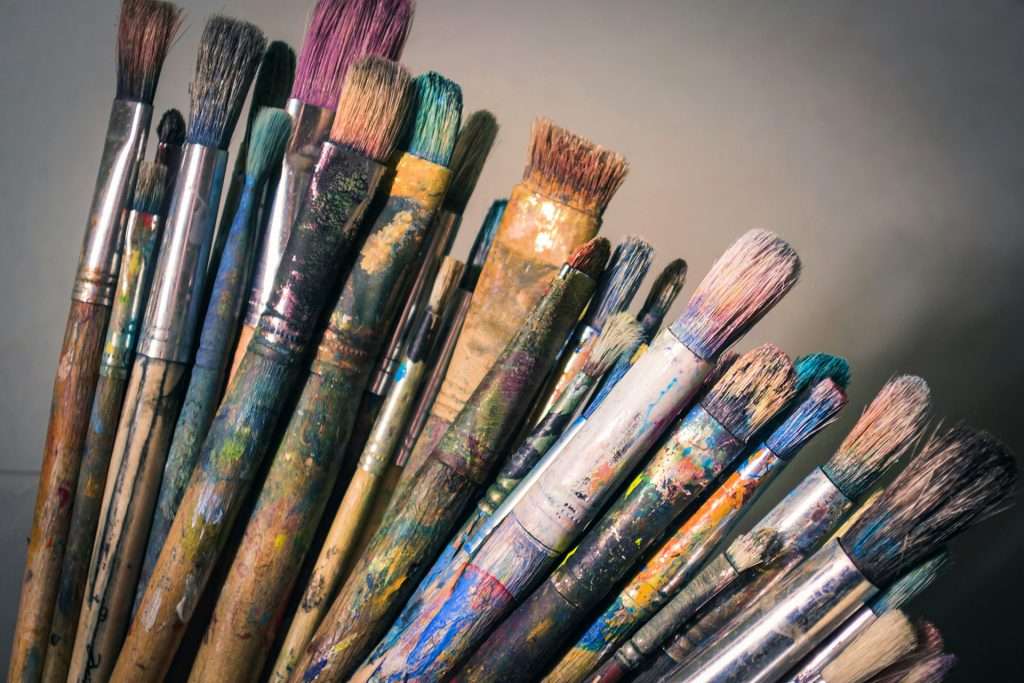
Photo credit: Dannie Jing on Unsplash
Louise and Alice’s podcast conversation was timely and helpful in putting my practice of entering Open calls into useful measure. Here are my main take-a-aways:
Positive Reasons for Responding to Open Calls
1. You are an emerging artist beginning your art career. Open calls are opportunities for exposure and visibility of your work.
2. Having your artwork shown alongside other artists builds confidence and credibility.
3. Being accepted and showing in Open Calls adds to your resumé / CV.
4. Gain experience working with galleries and understanding of their objectives.
5. Applying to Open Calls gets you organized. Responding requires a system: preparing image files, writing an artist’s bio and statements, and keeping these up-to-date and in one place.
You will also want a system for tracking Open Calls schedules, submission deadlines, drop-off and pick-up dates and times, the opening reception, and artist talk dates. Honestly, responding to Open Calls can be tedious and most artists will tell you they would rather be in the studio. Streamlining and having materials up-to-date is very helpful in not laboring over the process too much.
6. You might sell a piece which means you now have new fans and potential collectors of your work.
7. Some Open Call exhibits have Best in Show and People’s Choice awards where you could win prizes. (I can tell you from experience winning Best In Show was a thrill as was the cash prize).
The Downside of Responding to Open Calls
1. Your artwork does not show well in a “salon style” hanging of work. It’s good work but it can’t stand out in such a setting. (By salon style, I mean lots of work mounted both vertically and horizontally on a wall.)
2. Entry Fees. Open Calls can run from as low as $0 to $100 depending on the venue and how many pieces you submit for consideration. It’s a good idea to set an annual budget for Open Calls.
3. Your entered and accepted artwork to an Open Call will be held up for months when that piece is out of inventory and can not be sold.
4. Schlepping artwork to and from the gallery. I’m not a fan of this part but it’s a necessary aspect of being an exhibiting artist. For shows out-of-state or out of the country, shipping costs are your responsibility. (I have shipped work out-of-state using UPS and was sticker-shocked. Be prepared and shop around).
5. Likely, you won’t receive a stipend for having your artwork on view during the exhibition run dates. I think of a stipend as an artist’s “rental fee” for allowing a gallery to show your work during a specified timeframe. I have enjoyed earning a stipend for a piece once for an Open Call exhibit but this is rare.
My Open Call Experiences
When I first began showing my work regularly, it was exclusively in Open Calls and juried exhibitions.
Just starting, I was learning where my artwork and vision best fit in the art world (at least regionally). I was figuring out my voice and messaging surrounding the environment and climate change without alienating people.
Open Calls were a good entry point, a chance to meet gallerists and fellow artists, show in different venues and spaces, have the excitement of openings, and plenty of experience schlepping my work.
At times, I could feel like a number, almost a commodity, especially when it came to picking up my work after a show had closed. With Open Call exhibits, there isn’t the individual care and opportunity to work closely and build relationships with galleries.
Of the 21 exhibits I have participated in thus far, all but two were Open Calls. I have been exhibiting since 2016 and so I feel my days of Open Calls are coming to a close.
Even though solo exhibitions are labor intensive, I will say I enjoyed the two I’ve produced the most. One of the highlights is I got to understand my audience better. I could have conversations with people who were there to see my work, ask them questions, and get their perspectives.
Because I’m the only artist exhibiting, there wasn’t a visual overload of lots of different styles and mediums for people to take in, let alone consider purchasing. With a solo show, it’s easier for people to acquire a connection with an artist and their work. So far, my solo exhibitions are where I enjoy the most sales.
That said, there are many months, if not years, between solo exhibitions. A cohesive body of work needs time for me to produce. Like many artists, I will create pieces that don’t fit into my series work because the subject interests me or I am trying out something new. These are the odd ducks.
Instead of dropping out of Open Calls altogether, showing the odd duck now and then will say “I’m still here, working and showing, this is my work, what do you think?”
A Footnote
As an introverted and highly sensitive person (HSP), I have a difficult time branching out and meeting maybe a couple of fellow artists briefly at best at exhibit opening receptions. When your work is accepted, it‘s good form to show up to the opening reception, if possible. I decided I needed a plan on how to make the most of the Open Call experience and understand why I am entering and what I want to get out of it when my work is accepted. That will be a post for another day.
A Word About Rejections
Dear Artist, wear rejections as a badge of honor. You were brave enough to submit your work. I’ve had many rejections. All artists get rejections. At first, it stung. Over time, it doesn’t. You cannot take it personally. This has nothing to do with your work or its quality. There are many factors at play in the decision-making on who gets in a show and who does not. There are gallery space limitations, a vision of what the exhibit will be about, subjective tastes, etc. Please don’t let rejections stop you from doing the art that you do. The world needs your art.
Looking at Things from a Gallery’s View
Galleries are a part of the art world ecosystem. We need viable galleries. Many didn’t make it through COVID. That said, it’s important to remember that Open Calls are, in fact, a fundraising model, even if a gallery doesn’t explicitly spell this out. I for one, don’t have an issue with this. At the same time, knowing this fact can help clarify which Open Calls you want to apply. There may be some galleries you would like to form a more in-depth working relationship with, become a member of that gallery, etc.
Galleries carry the brunt of marketing costs and promoting exhibits they run. At the same time, as artists, our role is to promote exhibitions we are showing in as well. This gives galleries an expanded audience and sales opportunities.
Your Turn. Are you an artist who regularly applies to open calls for art? What has your experience been like? Are you someone who enjoys going to group exhibition opening receptions? What is your experience with these events? Do you try and meet the artists, and talk about their work? Do you run a gallery that hosts Open Calls? What are the upsides and downsides from a gallerist’s perspective? I would love to hear all your thoughts on the topic. I personally reply to all.

Is there a link or list of open calls? I mean a reliable source?
Thanks for sharing it helps a lot!!
Hi Regina,
The one reliable online source I know many artists use is CaFÉ https://www.callforentry.org/
It lists all the open calls for art regionally, nationally, and internationally. You can subscribe and get a weekly rundown of calls. Sometimes art residency opportunities are posted on CaFÉ as well. Another suggestion is to follow galleries where your art might be a good fit. If they hold juried exhibits, they will post about their open calls on their social media channels. If you have a local arts council or arts non-profit in your area, check them out. They may post open calls and other artist opportunities in their newsletter, for example. Here in Minnesota we have Springboard for the Arts that supports artists with all kinds of business and marketing programming as well as posting about open calls. But then, here in Minnesota, we have a lot of artists and lots of venues in which to exhibit and sell our work. I joke that we have more artists in Minnesota than we have lakes! I hope this is helpful and wish you the best of luck in your art career. Please don’t hesitate to reach out. Warmly, Kristin